
Hey, Whipple, Squeeze This: The Classic Guide to Creating Great Ads by Luke Sullivan
Posted on December 16, 2013 Leave a Comment
Me reading this book = pausing every few seconds to nod head, highlight and secret fist pump that this book exists. 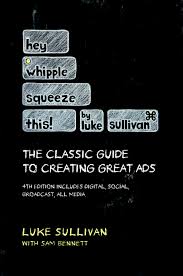
And in a grand show of crazy-kindle-highlighting, I ended up with 146 pieces of much loved content!
Suffice to say it has now become my absolute favourite (to date) book on advertising and creativity. It’s definitely going on the highly recommended list! I’ve read it twice. Yes, it’s that good!
3 things to love about this treasure
- It’s written like a chat with a friend (a v funny one), with none of that corporate speak that makes you feel like a naughty five year old.
- Did I mention the guy is v funny?
- Full, brimming, busting, with a serious amount of AMAZING advice.
Top 8 fav quotes from Hey Whipple, Squeeze this
(headings = mine, quotes = directly from the book)
1. You gather as much information on the problem as you can. You read, you underline stuff, you ask questions, you visit the factory. 2. You sit down and actively attack the problem. 3. You drop the whole thing and go do something else while your subconscious mind works on the problem. 4. “Eureka!
2. Creativity = washing a pig
“I’m serious. Creativity is exactly like washing a pig. It’s messy. It has no rules. No clear beginning, middle, or end. It’s kind of a pain in the ass,”
3. Online is the first place consumers look
“Online is where the clients are spending more of their marketing dollars, and there’s a dirt-simple reason for it: it’s the first place we look, people. It’s the first place everybody looks…”
4. Content is king, queen and princess
“How can a brand get any attention at all?” The answer: Have better content than everyone else.
“Quit interrupting the interesting things people want to look at and start being the interesting thing to look at. Quality content trumps all.”
5. Storytellers (plus a cool way to explain what you do if you’re in the biz)
“We are storytellers in service of brands.”
6. Don’t talk constantly about yourself (or your brand) on social
“Conversation strategy is just as important here as it is on Facebook, and I read again and again of either the 80/20 rule (promote others 80 percent of the time and your own agenda 20 percent) or the thirds rule (one-third industry-related stuff, one-third about your field or company, and one-third about your fine self).”
7. All art/creativity is theft (for more on this read: Steal Like An Artist)
It’s been said there are no new ideas, only rearrangements. Picasso himself said, “All art is theft.” Historian Will Durant wrote, “Nothing is new except arrangement.”
8. Stop trying to make every message/product fit into one spot
“Smart companies know this. Coca-Cola owns nearly 80 brands of soft drinks, but they’ve never run an ad for all of them with some catchall claim like, ‘Bubbly, sugar-based liquids in a variety of vastly different tastes for all your thirst needs.’
Grab the book, hell grab 10 copies and give them out to your workmates.
How I Raised Myself From Failure by Frank Bettger
Posted on December 15, 2013 Leave a Comment
If I had to give this book an alternate title it would be this: the magic of enthusiasm. 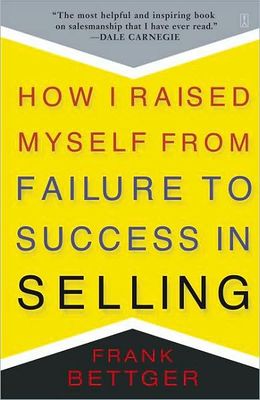
As such I decided to dedicate all of my notes to the power of enthusiasm. Cos yes – it’s that important! 🙂 On the actual book – I found it a sweet read and very motivating (quite self-helpy if you like that sort of thing). Frank’s background is sales and baseball and his stories revolve around being an absolute failure in both until he turned his life around with enthusiasm.
And yes that sounds v. corny, but hey if it works!
Pumping up your enthusiasm – the how, the why and what it will get you
(all quotes directly from the book/author)
The how….
Force yourself
“Can you acquire enthusiasm—or must you be born with it? Certainly, you can acquire it! Stanley Gettis acquired it. He became a human dynamo. How? Just by forcing himself each day to act enthusiastic.”
Act
“When can you begin? Right now. Just say to yourself, “This is one thing I can do.” How can you begin? There is just one rule: To become enthusiastic—act enthusiastic.”
The why…. Read More
Steal like an artist: 10 things nobody told you about being creative By Austin Kleon
Posted on December 3, 2013 Leave a Comment
This is the best book on creativity I’ve read all year.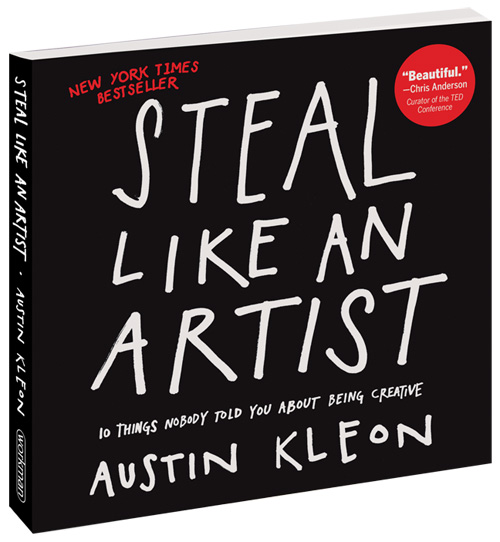
The end.
What you need more convincing?
Okay, here’s the book summed up on one quote:
Every artist gets asked the question, “Where do you get your ideas?” The honest artist answers, “I steal them.”
This is the kind of book that you finish reading (in a single day cos you can’t put it down) and then go racing to your workstation and pummel out that first draft/blog/comic/painting that you’ve been wanting to do but procrastinating on forever. Yeah. Or, like self, you decide to set up a spontaneous word press site to blog about books!
And… here’s eight magnificent pieces of advice from the book, that you can implement right now.
Actually, just try five of these and I reckon you’ll be on your way to becoming a fabulous virtuoso (sounds so much fancier than artist)
- Start copying (note: this is not plagiarism, see note on lawyers below)>
- Keep a praise file (to make you feel good. I also highly recommend this for work related performance reviews – otherwise by the time the end of the year rolls around, you’ll have forgotten how magnificent you were)
- Start a swipe file (exactly what it sounds like – file of things you want to swipe. If you’re a digital person then I find Evernote beautiful for this)
- Your job is to keep learning, Austin says: “School is one thing. Education is another.”
- Get curious. Google everything
- Write a public/online fan letter (perhaps this blog post is almost one?)
- Leave it out. (there’s a beautiful chapter in the book entitled creativity is subtraction, what you leave out is sometimes more important that what you include)
- Use your hands (creativity is about pen and paper, not staring at a computer).
The list above is barely touching on all the gems in this book. This is going on my ‘read at least once per year’ list of books.
A word to those imagining lawyers and lawsuits thundering down upon them
Don’t get him wrong: Austin isn’t talking about plagiarism here. He lists the divide between ‘good theft’ and ‘bad theft’ rather skilfully. Examples of good theft include; studying, stealing from many, crediting, transforming and remixing. Bad theft is exactly the opposite and what you thought about doing more than once in your uni days (steal from one, plagarize, imitate etc)
Paperback baby
I rarely buy paperbacks these days but… this book is so scrummy I’m considering it! I really want to stare-at-on-paper at the awesome handwriting, charts, captions and other bits peppered through the book.
Purchase this bad-boy on Kindle or paperback @ good ol Amazon.
Happy stealing!
C x
Lipstick on a Pig: Winning In the No-Spin Era by Someone Who Knows the Game by Torie Clarke
Posted on November 17, 2013 Leave a Comment
 Don’t you just love this title?
What is it with pigs and marketing/comms? It reminds me of this quote:
“Creativity is like washing a pig. It’s messy. It has no rules. No clear beginning, middle or end. It’s kind of a pain in the ass, and when you’re done, you’re not sure if the pig is really clean or even why you were washing a pig in the first place.” – From Hey Whipple.
I digress! In this title Torie is comparing putting lipstick on a pig with trying to dress up/gloss over/hide a really crappy story or action. In other words = spin.
I was so pleasantly surprised with this book, as I’ve never worked in political comms I thought I’d find it quite dull – was I ever wrong! Regardless of your stance on politics – Torie was the communications boss at the Pentagon during the early years of George Bush – this is an amazing insight into what goes down at these high level jobs (Torie was at the Pentagon on September 11) and what we can learn as a result.
And of course it’s hugely practical – which of course I adore. And for those who still believe PR is completely about spin and dodgy dealings – Torie heavily endorses transparent, telling the truth and getting your (accurate) information out their first.
So thank you Torie, wherever you are, for writing such an insightful book that we can all learn from! Personally I absolutely love how you admit your own failings or mistakes in the book – and what you learnt as a result.
Here’s a few of my favourite quotes from the lady herself
And yes I found it incredibly hard just to pick a few. This one has gone onto my recommended reading list over here.
(headings = mine, quotes all directly from the book)
1. A way of handling crisis – 3 part strategy
Own up. Stand up. Speak up.
“Speak up. McCain and Hagee spoke up early and often. No matter what’s being alleged, charges unanswered are charges assumed to be true.”
2. Questions to avoid
“That question put me in a tough spot. A pretty good rule of thumb for dealing with the media is never to answer questions that start with “if.” They’re hypothetical.”
3. Be first with bad news
“The reason is simple: in the Information Age, the bad news is going to get out. The only questions are who will tell it first and will they tell it accurately.”
4. When to slap yourself
“….you ever hear yourself saying, “Don’t worry, no one will ever find out,” about something unpleasant in your organization, just slap yourself.” Read More
Trust Me, I’m Lying: Confessions of a Media Manipulator by Ryan Holiday
Posted on November 17, 2013 Leave a Comment
This book is pretty controversial for some. Me? I loved it! 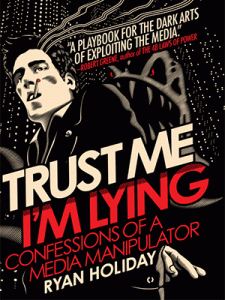
Don’t get me wrong – I don’t agree with many of the tactics Ryan has used (outright lying! fake documents/pictures etc) but I found this a fascinating read into his manipulation of the media system and particularly how he used the online news and blogs to spin different fabrications of stories.
The book delves into Ryan’s work as Marketing Director for American Apparel and his work for authors like Tucker Max. For his part he says he has published this book so people can see that the media system is broken (he likens his marketing job to feeding beast). And what they do with the tactics (use them for good or evil) is up to them.
Here are six of Ryan’s comments on the media system
(all quotes directly from the book)
- “Usually, it is a simple hustle. Someone pays me, I manufacture a story for them, and we trade it up the chain—from a tiny blog to Gawker to a website of a local news”
- “At the first level, small blogs and hyperlocal websites that cover your neighborhood or particular scene are some of the easiest sites to get traction on.”
- “And when I want to be direct, I would register a handful of fake e-mail addresses on Gmail or Yahoo and send e-mails with a collection of all the links gathered so far and say, “How have you not done a story about this yet?” Reporters rarely get substantial tips or alerts from their readers, so to get two or even three legitimate tips about an issue is a strong signal.”
- “Gawker paid writers twelve dollars a post as late as 2008. And of course these rates don’t include the other duties bloggers are stuck with, such editing, responding to e-mails, and writing comments. Professional blogging is done in the boiler room, and it is brutal.”
- “One of the quickest ways to get coverage for a product online is to give it away for free to bloggers (they’ll rarely disclose their conflict of interest).”
- “Pageview journalism treats people by what they appear to want—from data that is unrepresentative to say the least—and gives them this and only this until they have forgotten that there could be anything else. It takes the audience at their worst and makes them worse.”
Ryan has also written on Growth Hacking.
Happy reading,
C
Good Self, Bad Self: Transforming Your Worst Qualities into Your Biggest Assets by Judy Smith
Posted on November 13, 2013 Leave a Comment
If you are gloriously obsessed with the TV show Scandal (like myself), then you will know exactly who Olivia Pope is. 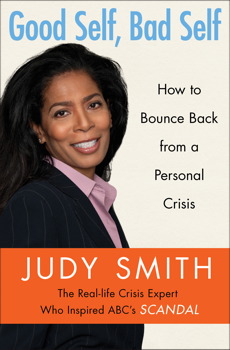
What you might not know is her kick-arse character (a fixer for politicians) is based on a REAL person: Judy Smith.
I do believe I squealed with excitement when I found out
- Scandal was based on a real person (ie one I could google stalk)
- Said person had written a book that I could devour, thereby bringing me one step closer of embodying Olivia ‘Popeness’.
The book is based around Judy’s experience of handling many a high-powered crisis and delves into how character traits can be both our biggest success and our undoing.
I quote:
“While you may have already known that deep down, what you might not realize is that our best qualities and our worst traits are actually one and the same.”
She covers off different traits (envy, ego etc) and details how we can keep them in-check. My fav part of the book is the real life examples that she uses in each section. E.g. the CEO client with the out-of-control-ego – you get the idea!
Here’s my two favourite themes from the book:
1. Perfection
My words: Don’t attempt to be perfect, you ninny – or you’ll end up on TV and in a large disaster where you’ll have to phone the Pope team.
Her words: And here’s the crux of it: None of us is perfect. Expecting perfection—in life, work, interpersonal relationships, health habits, driving, studying, you name it—is a surefire ticket to failure. Read More
 The Marketer's Bookshelf
Recent Comments